Blood Flow Restriction
Build strength and support recovery with lighter weights.
What Is Blood Flow Restriction Training?
A low-intensity approach to strength and muscle growth.
Blood Flow Restriction (BFR) training uses specialized medical tourniquets to partially restrict blood flow to your limbs during low-intensity exercise. This allows you to achieve strength and muscle growth similar to high-intensity training while using significantly lighter weights. It can be ideal for people recovering from injury, older adults, or anyone who cannot tolerate heavy lifting.
How BFR Works
A carefully controlled training process guided by your therapist.
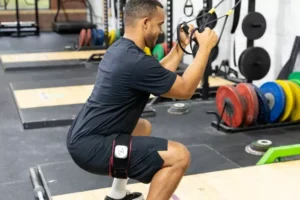
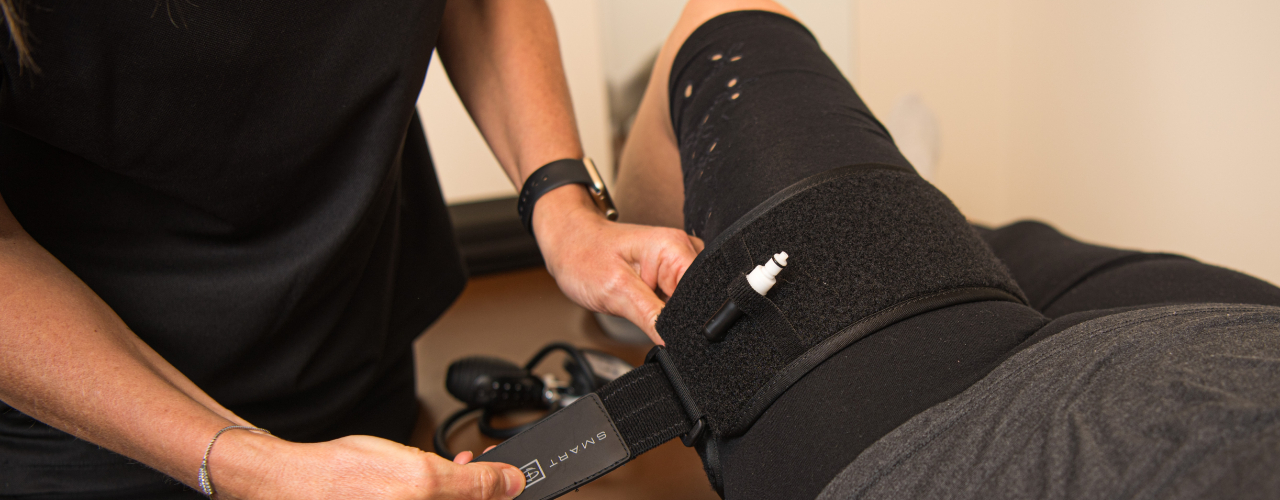
Personalized Cuff Placement
Cuffs are placed on the upper arms or thighs and inflated to a specific pressure for the individual.

Low-Intensity Exercise
You perform exercises at 20–30% of your maximum effort with higher repetitions instead of heavy loads.
Strength-Building Response
The restricted blood flow creates a hypoxic environment that helps trigger muscle growth and strength gains.
Benefits and Candidates for BFR
Train toward your goals while reducing stress on your joints.
BFR can increase muscle strength and size with lighter weights, improve recovery and rehabilitation, reduce stress on joints, and activate muscle growth factors. It may benefit post-operative patients, people recovering from injuries, older adults, athletes seeking enhanced recovery, and people looking to improve strength and muscle mass.
Why Choose KnoxPT for BFR?
Safe, precise, and individualized care from trained therapists.
KnoxPT uses advanced SmartCuffs and Doppler ultrasound to establish personalized pressure settings. Our therapists are trained in proper BFR techniques and protocols, then tailor the program to your needs and goals. BFR is performed under therapist supervision, and we carefully review your medical history because certain circulatory conditions and clotting risks may be contraindications.